

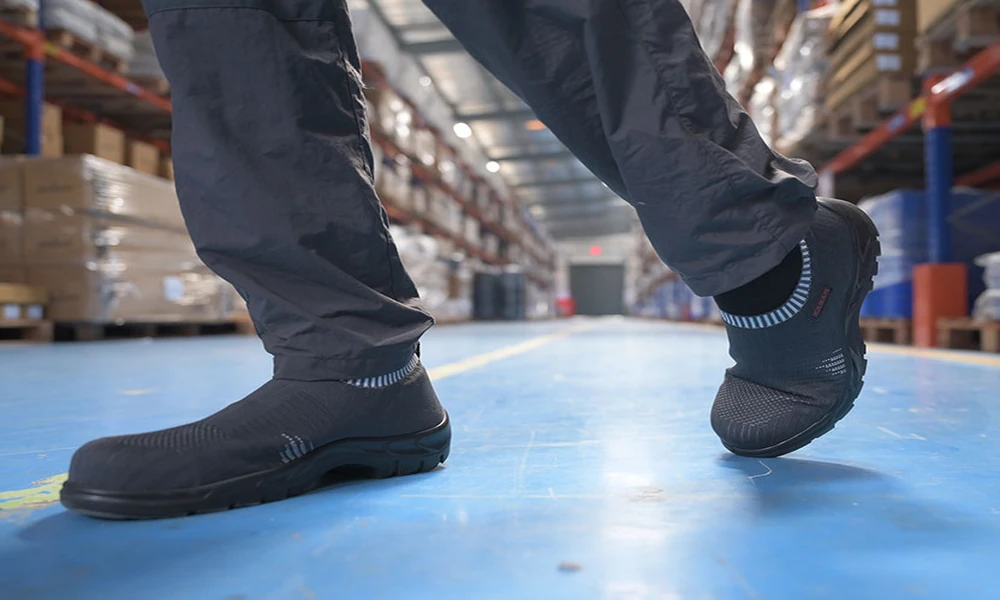
Buying protective footwear involves more than choosing a sturdy-looking boot. Different workplaces expose employees to different hazards, and a heavy appearance does not automatically indicate adequate protection. Workers researching CAT steel toe boots should understand the meaning of safety labels, protective features, and workplace requirements before making a purchase. Knowing how footwear specifications relate to actual job hazards helps prevent confusion and encourages better decisions. This is particularly important when employers require footwear that meets specific recognized safety standards.
Identify the Hazards First
Every workplace presents its own combination of risks. Construction sites may involve falling tools and heavy materials, while manufacturing facilities can expose workers to moving equipment, sharp objects, and slippery surfaces. Identifying these hazards is the first step toward choosing appropriate protective footwear.
Ask your employer or safety supervisor which footwear specifications are required. A workplace risk assessment may identify needs such as impact protection, compression resistance, puncture resistance, or electrical hazard protection. Selecting boots according to documented requirements is more reliable than relying on appearance or general product descriptions.
Understand Protective Toe Construction
A protective toe cap is designed to reduce the risk of injury from certain impact and compression hazards. Steel is one commonly used material, although other protective toe constructions are also available. The presence of a toe cap alone does not establish that footwear meets a particular safety standard.
When comparing Caterpillar steel toe boots, examine the product’s stated certification and protective specifications. For US workplaces, relevant footwear may be assessed against ASTM F2413 requirements. Always check the actual markings and manufacturer information rather than assuming that every model provides identical protection.
Learn What Safety Markings Mean
Protective footwear labels communicate information about the hazards a product has been designed and tested to address. Depending on the applicable standard, markings may identify impact resistance, compression resistance, electrical hazard protection, or other specified characteristics.
Do not assume that one protective feature automatically includes another. A boot with a protective toe may not provide puncture resistance or suitable protection against electrical hazards. Reading the complete label helps distinguish between features that are genuinely certified and those that are merely suggested by marketing language.
Evaluate Outsole Performance Carefully
Slips and trips can occur even when a boot provides excellent toe protection. The outsole must be appropriate for the surfaces encountered during work. Smooth indoor floors, muddy ground, oily areas, and loose gravel create different traction requirements.
Examine the tread pattern and any available slip-resistance information. Deep lugs may help on certain outdoor surfaces, while other outsole designs may perform better indoors. Remember that no sole guarantees protection against every slippery condition, especially when contaminants accumulate or the tread becomes worn.
Consider Comfort During Long Shifts
Safety compliance is essential, but uncomfortable footwear can become difficult to wear throughout a demanding shift. A boot should provide sufficient toe space, stable heel positioning, and an appropriate fit across the middle of the foot.
Try protective footwear with the socks normally worn at work. Walk on a suitable surface and check for pressure points. If the boot feels excessively tight around the protective toe area, do not assume that continued wear will solve the problem. Protective toe caps are not designed to stretch to accommodate an incorrect fit.
Recognize Different Environmental Requirements
Some workplaces require additional protection against moisture, chemicals, heat, or electrical hazards. These conditions should be considered separately because a boot designed for one environment may not be suitable for another.
Water-resistant construction, for example, does not necessarily mean a boot is fully waterproof. Similarly, electrical hazard-rated footwear has specific limitations and should not be treated as a substitute for appropriate electrical safety procedures. Always follow workplace instructions and the manufacturer’s stated limitations.
Inspect Boots Before Every Shift
Protective footwear should be checked regularly for visible damage. Examine the outsole for excessive wear, inspect the upper for separation or cracks, and look for signs that the protective structure may have been compromised.
If a boot experiences a significant impact or shows structural damage, consult the manufacturer’s guidance and workplace safety procedures. Protective components may require replacement even when damage is not obvious. Keeping footwear clean and dry also helps preserve its condition between shifts.
Conclusion
Choosing appropriate safety footwear requires an understanding of workplace hazards, recognized standards, protective features, and personal fit. A strong-looking boot is not necessarily suitable for every job, so product markings and employer requirements should guide the selection process. Regular inspection and proper maintenance are equally important after purchase. Workers researching protective footwear can use fitnshoes.com to explore relevant styles, while confirming that any selected model meets the safety specifications required for their particular working environment.
