

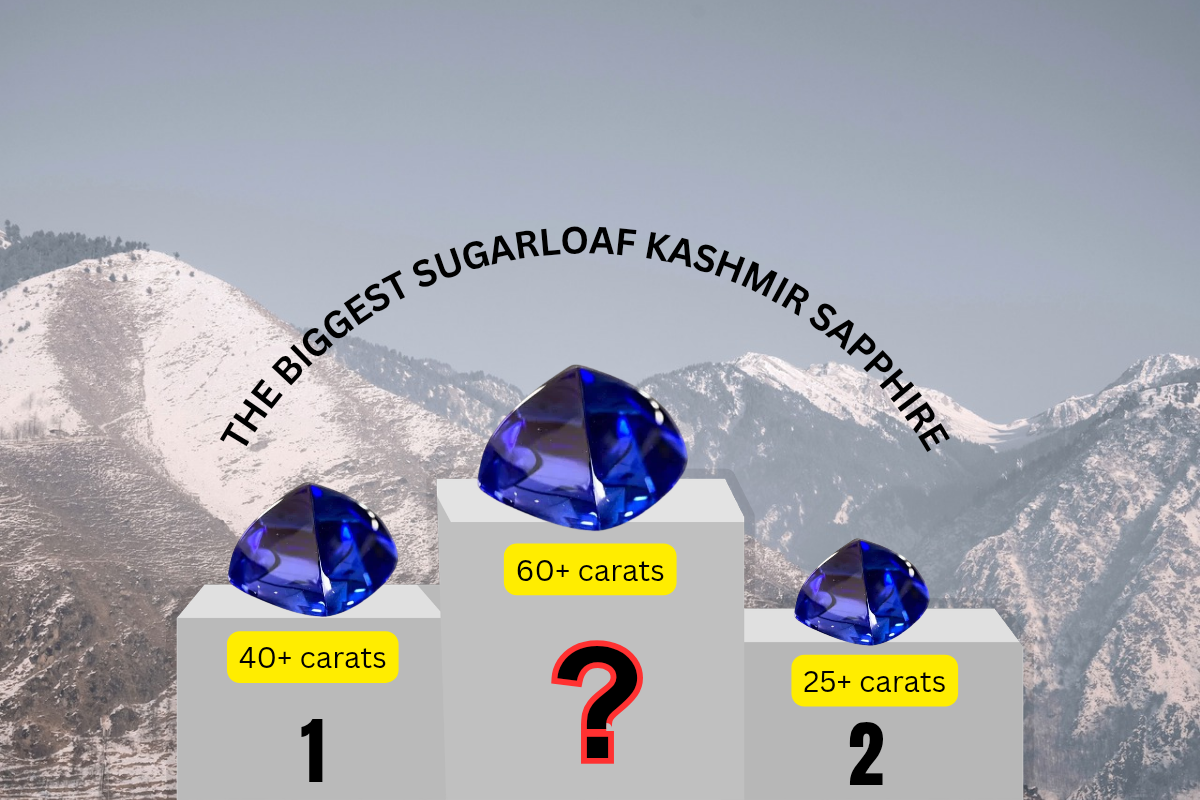
The Vanderbilt Sapphire At 42.68 Carats – The Biggest Sugarloaf Kashmir Sapphire
The Peacock Blue pendant continues to attract interest among gemstone traders, collectors and enthusiasts of historic royal jewelry. At the center of this pendant is a 60-plus-carat sugarloaf cabochon Kashmir blue sapphire, described in online accounts as part of the treasures associated with the Maharajas of Kashmir. Its impressive reported size has inspired discussion about its place among the world’s great historic sapphires.
The Peacock Blue pendant is linked in circulating historical accounts to a gift presented to a foreign diplomat at the conclusion of his official tenure in the region. The reported presentation took place during the reign of the second Maharaja of Kashmir, Maharaja Ranbir Singh, who ruled from 1856 to 1885.
The Maharajas belonged to the Dogra Dynasty, which ruled Jammu and Kashmir from 1846 to 1952. The dynasty’s royal legacy remains an important part of the region’s history, and jewels associated with its rulers continue to interest historians and gemstone collectors.
When talking about large Kashmir blue sapphires with a sugarloaf cabochon cut, the 60+ carat sapphire set in the Peacock Blue pendant, is generally kept off the list. The leading reference for this category is the Vanderbilt Sapphire, a 42.68-carat Kashmir blue sapphire fashioned as a sugarloaf cabochon. The gemstone rated as the largest sugarloaf cabochon blue sapphire with a Kashmir origin, is mounted in a diamond brooch created by Tiffany & Co. and associated with the Vanderbilt family collection. Its exceptional color, distinctive shape and documented Kashmir origin have established its prominence among important historic gemstones.
In November 2025, Phillips auctioned the brooch at its Geneva Jewels Auction: V. The jewel hit a final bid of approximately US$3.57 million. Reports from AGL, SSEF and Gübelin accompanied the gemstone, confirming its Kashmir origin and recording no indications of heating. This auction established a significant public benchmark for large sugarloaf sapphires from Kashmir.
The Peacock Blue pendant occupies an equally fascinating place in discussions about royal treasures and exceptional Kashmir sapphires. A documented public presentation of the jewel, supported by independent gemological reports from institutions such as GIA or Gübelin, would bring its reported characteristics into the international collecting spotlight. As some experts mention, neither the pendant nor the big Kashmir blue sapphire, has made an appearance since it left the treasury of the Maharajas.
Leading auction houses provide an important meeting point for rare gemstones, established collectors and major jewelry investors. Their examination processes, specialist cataloguing and international publicity help exceptional jewels receive serious attention. Rumors of an intent to sell related to the Peacock Blue pendant have, been heard at various times – but there has not been any official statement made.
The Peacock Blue pendant remains an intriguing subject in the history of Kashmir’s royal jewelry. Its reported 60-plus-carat gemstone continues to inspire interest, while the Vanderbilt Sapphire though much smaller than the sapphire in the pendant, offers a documented example of the recognition and auction success achieved by a major sugarloaf Kashmir blue sapphire.
